COUNTER-CULTURAL PERSPECTIVES OF AN ORGANIC INTELLECTUAL: SELECTED WORKS OF RUDOLF C. HEREDIA
Rudolf C. Heredia is an independent writer/researcher. He obtained his doctorate in Sociology from the University of Chicago (1979), and taught sociology at St Xavier’s College, Mumbai, where he was the founder director of the Social Science Centre. His interests include issues related to religion, education, globalisation. He is now resident in Mumbai. For full bio and bibliography please click here.
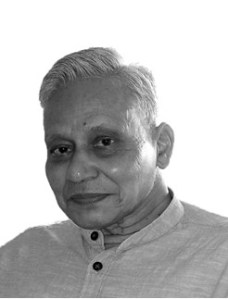
Introduction to Counter-Cultural Perspectives of an Organic Intellectual: selected works of rudolf c. heredia
This collection brings together essays and presentations (click for list) that span some five decades of my work. These are in the overall discourse of the social sciences and though I have trained as a sociologist my perspective is more interdisciplinary. This is really the only way contemporary social issues and questions can be approached if they are to have any relevance today. CLICK TO READ MORE.
A continuing thread that runs through this collection. It represents an ongoing venture to bring a critical reflection on social issues that engage activists in the field. Thus, rather than indulge in ‘ad hoc’ responses, they can create a praxis of action-reflection-action in the tradition of Paulo Freire. Hopefully, this interaction between the ‘desk and the field’ will enrich both, activists to more effective action on the ground and theorists to a more critical appreciation of the underpinning ideas.
The collection is divided by common overall themes into separate volumes to provide a coherent unifying perspective to each volume. While each essay has its own specific context and topic, yet given the time span they cover, some overlap and repetition across these volumes is inevitable. However, we have tried to exclude this within the volume itself, unless there is a different nuance in the presentation that justifies its inclusion despite the overlap.
The articles selected for a particular volume follow in the order of the date of their publication (or of writing, if the piece wasn’t published). This is to give an idea of how the theme developed in my discourse on it. Hopefully, the discourse itself is open-ended, so the reader can take it forward in various directions, that are only implied in this selection.
CLICK ON THE TITLE OF A VOLUME below (or volume number on the main menu above) to read its introduction, list of articles with abstracts, read the volume online or download it as a PDF.
I. Socio-Cultural Perspectives: Pluralism and Multiple Identities
II. Socio-Political Perspectives: Contradictions and Complementarities
III. The Development Debate: Growth and Equity
IV. Religion and Society: Secularism and Its Discontents
V. Ecological Concerns: Environmental Sustainability
VI. Hermeneutics of Dialogue: Discourses on The Self and The Other
VII. Education: The Dual System
VIII. The Tribal Question
IX. Gandhiana: Essays on A Yuga Purush
X. Globalisation And Its Discontents Globalisation
XI. Jesuitica: For the Jesuit Parivar
XIII. Book Reviews
XIV. Poems

